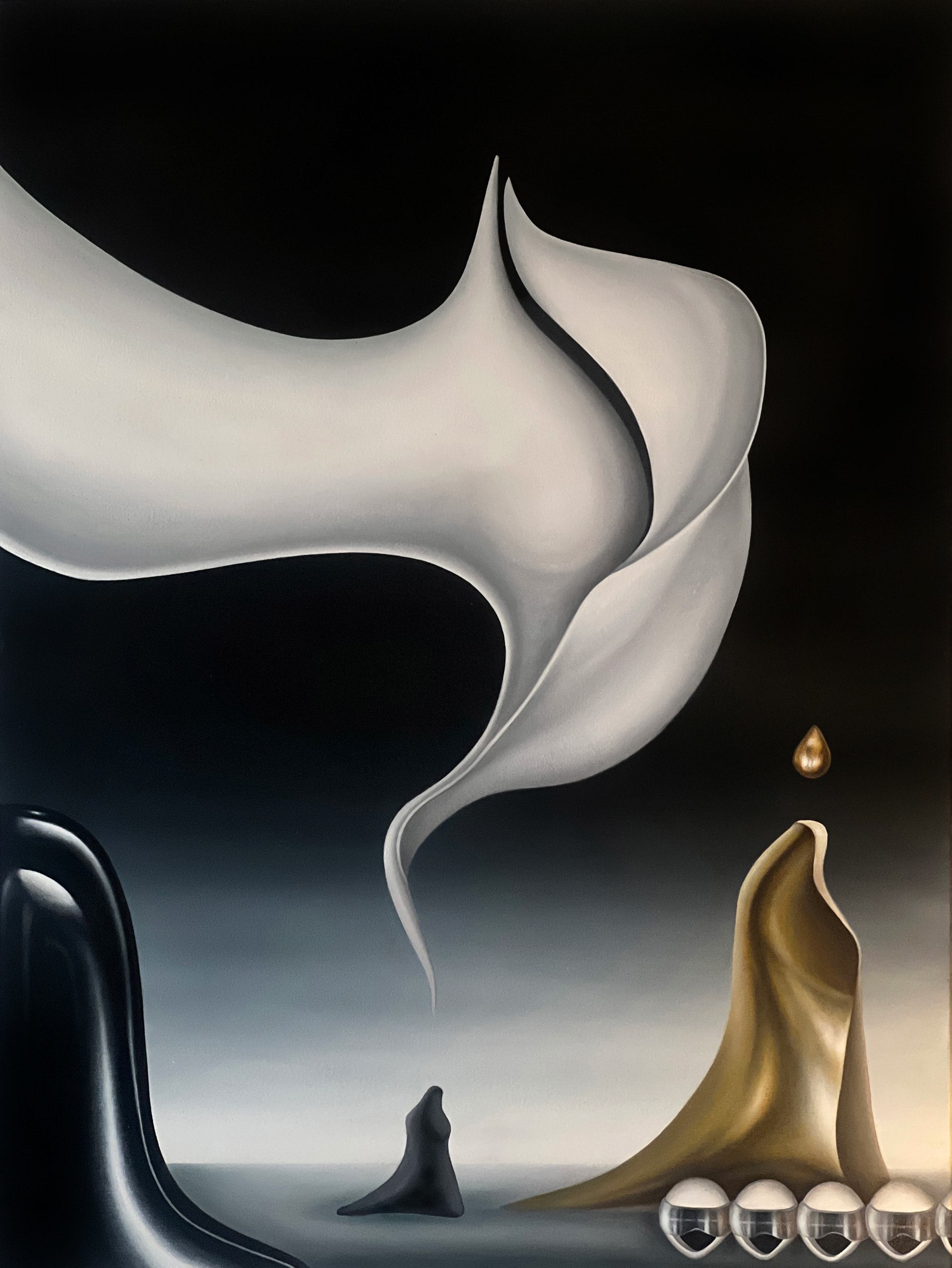
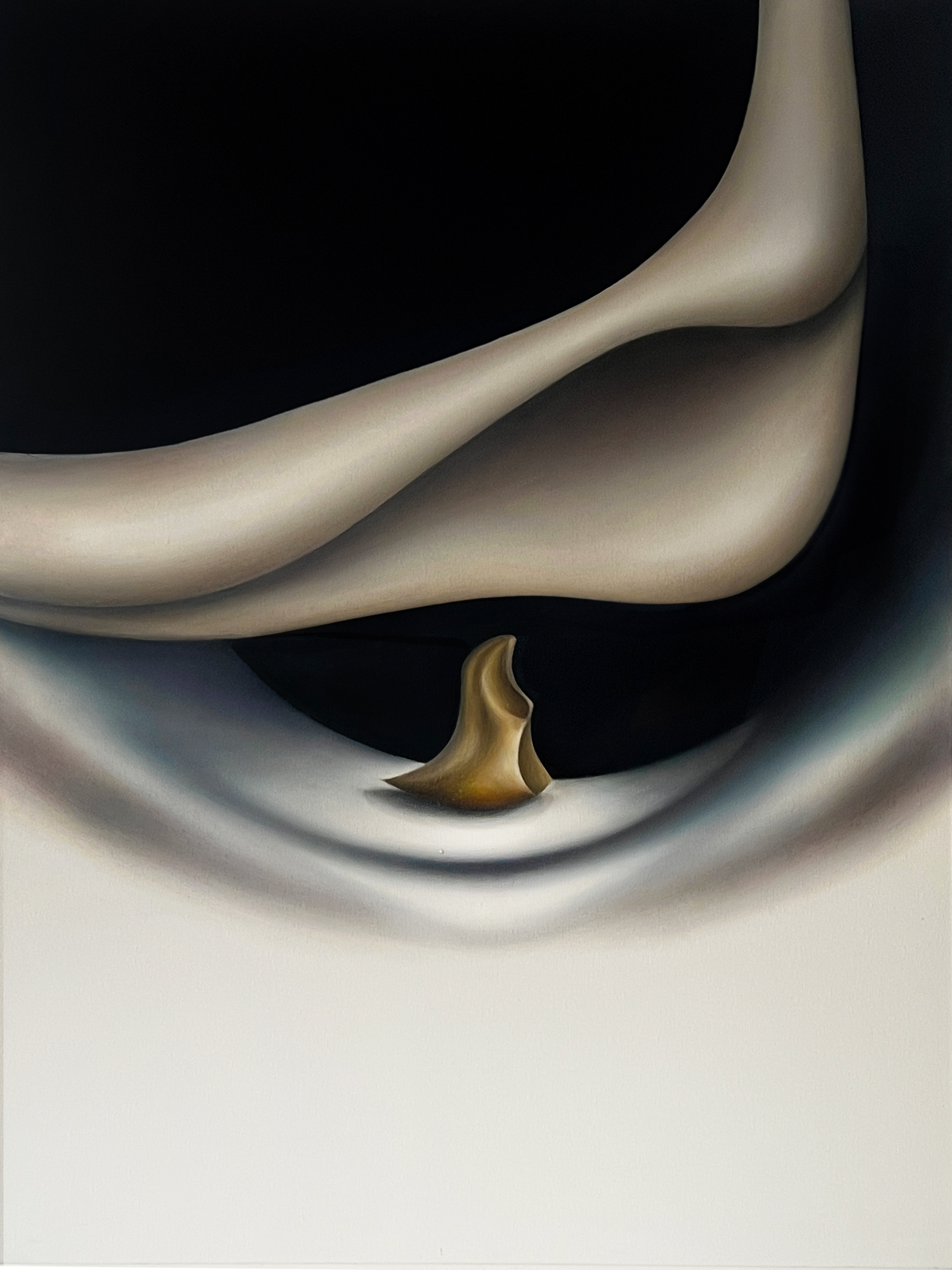
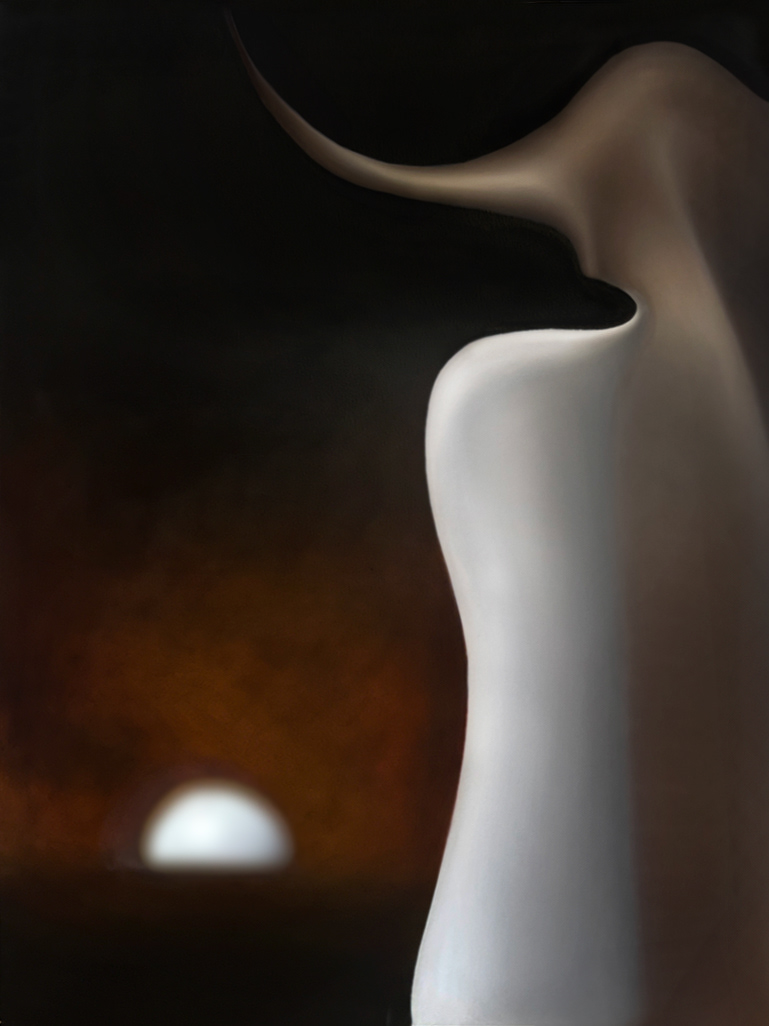
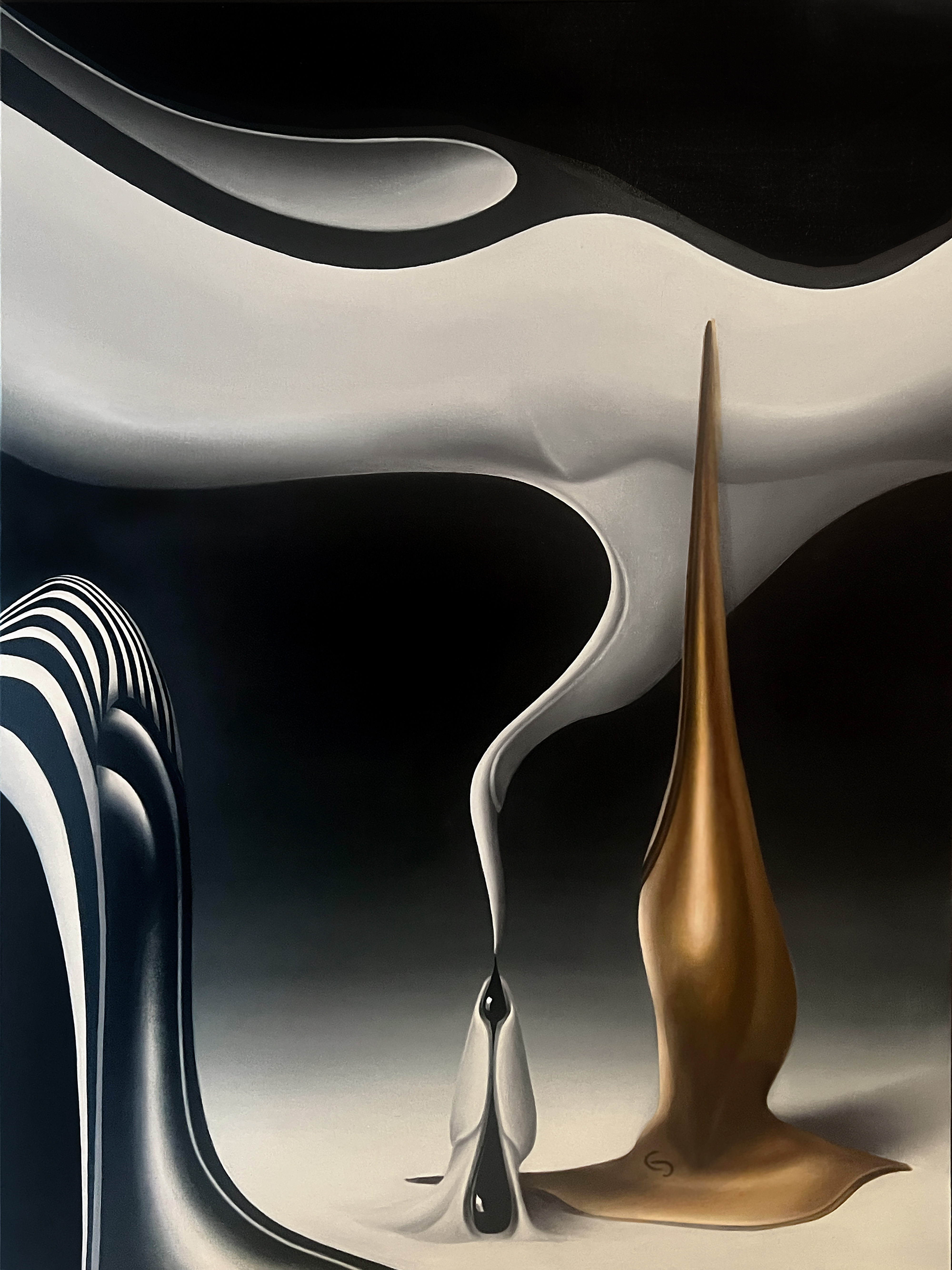
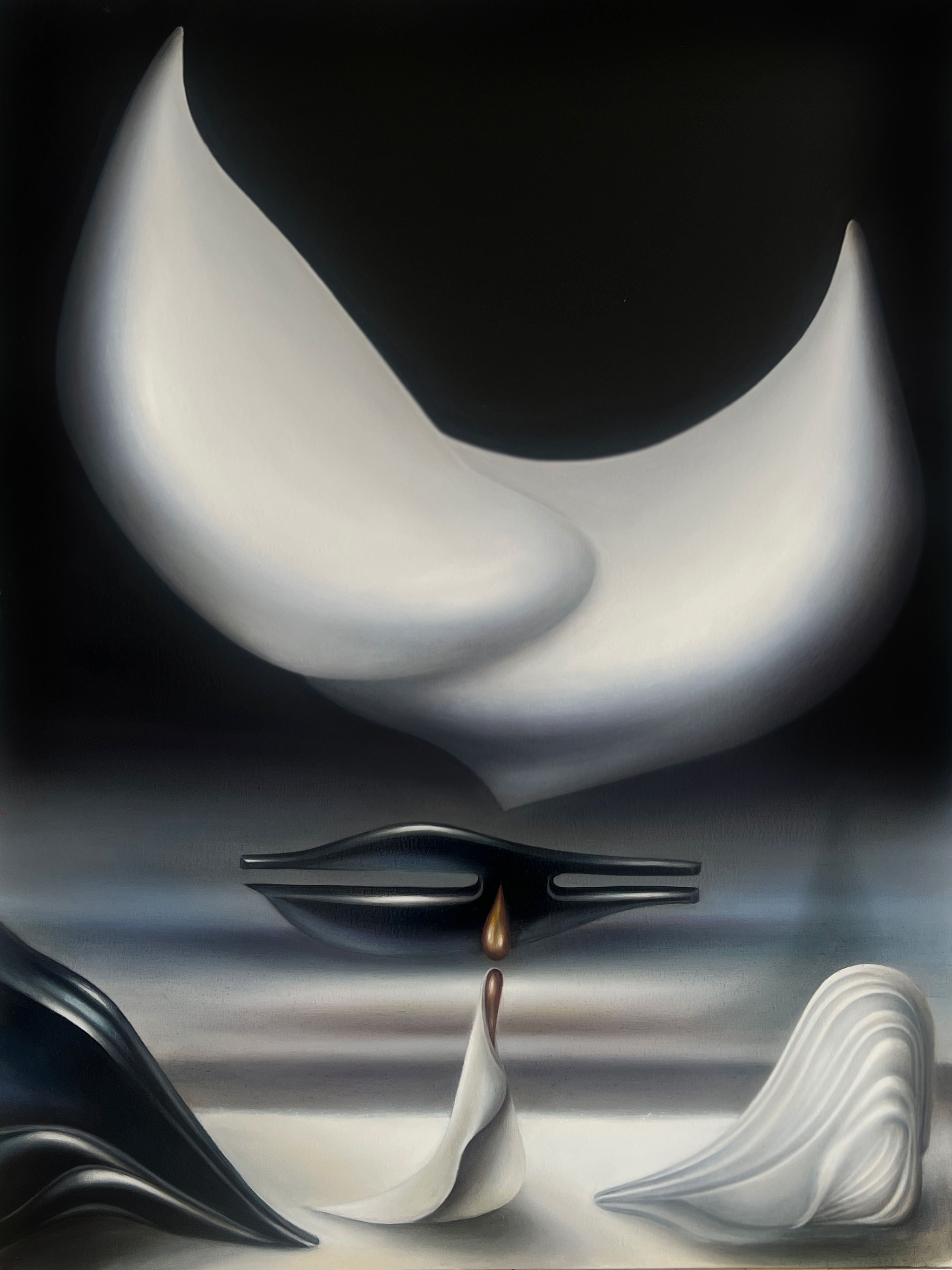
Timeless Majesty is the body of work through which Dimensionalism emerged.
The paintings are constructed to produce a perceptual condition rather than to communicate a predetermined narrative or fixed meaning. Their forms are precise and internally coherent, yet resist complete identification. They may appear bodily, architectural, organic or entirely unfamiliar without settling permanently into any one category.
This unresolved state is intentional. Human perception tends to move rapidly from recognition to classification: something familiar is detected, named, and subsequently understood through that identification. These paintings interrupt that progression. Recognition may begin, but certainty is not guaranteed.
Form, proportion, value, edge, restraint, spatial tension and ambiguity operate together to sustain that interval. The image functions as a carrier for a perceptual event: the viewer searches, recognizes possibilities, loses them, returns, and reorganizes what is being seen. The absence of a final identification is therefore not a problem to be solved. The continuing activity of perception is part of the work.
The paintings are deliberately left without explanatory interpretations. What the artist recognizes within a form is not given authority over what another person may encounter. Meaning can emerge, but it is not required to govern the experience.
At the center of Timeless Majesty is a proposition that extends beyond representation: something can possess coherence without identification, presence without a fixed identity, and precision without submission to an existing category.